

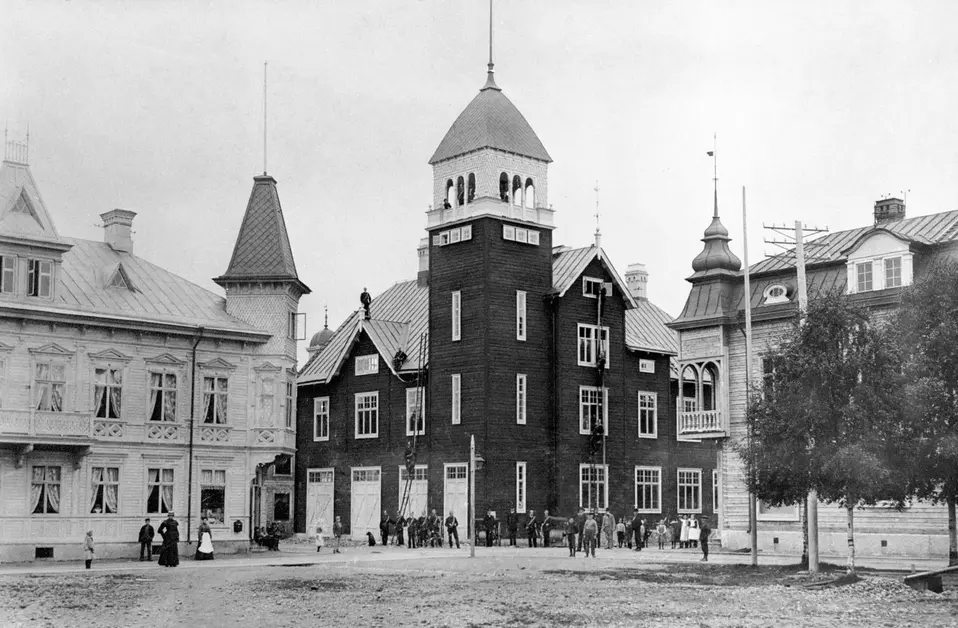
Den gamla brand- och polisstationen. Foto: Skellefteå museum
FEATURE STORIES
Experience a guided tour through myths and memories
For several years now, Visit Skellefteå, in collaboration with local organizations, has been inviting both residents and visitors to guided storytelling walks that keep the city’s history, myths, and heritage alive. We joined a walking tour where the past and present meet—right in the heart of the neighborhoods that have shaped today’s Skellefteå.
What happened to the old wooden town? And what is the story behind “Johanna in the Park”? These questions set the tone as we gather for a city walk that’s not just about buildings, but also about our shared identity.
The annual storytelling walks follow various recurring themes linked to the city’s development. This time, architect Andreas Fossland will guide us through Skellefteå’s architectural history. For the third year in a row, he’ll lead the group through the city’s layers of time—each time offering new perspectives.
- Skellefteå has existed longer than we’ve had city rights. “For me, it’s important to explain how the city came to be, why people moved here, and why it’s located right here. This time, I especially want to highlight the burg and the more modern elements—but always with the question ‘why’ as the foundation,” says Andreas.
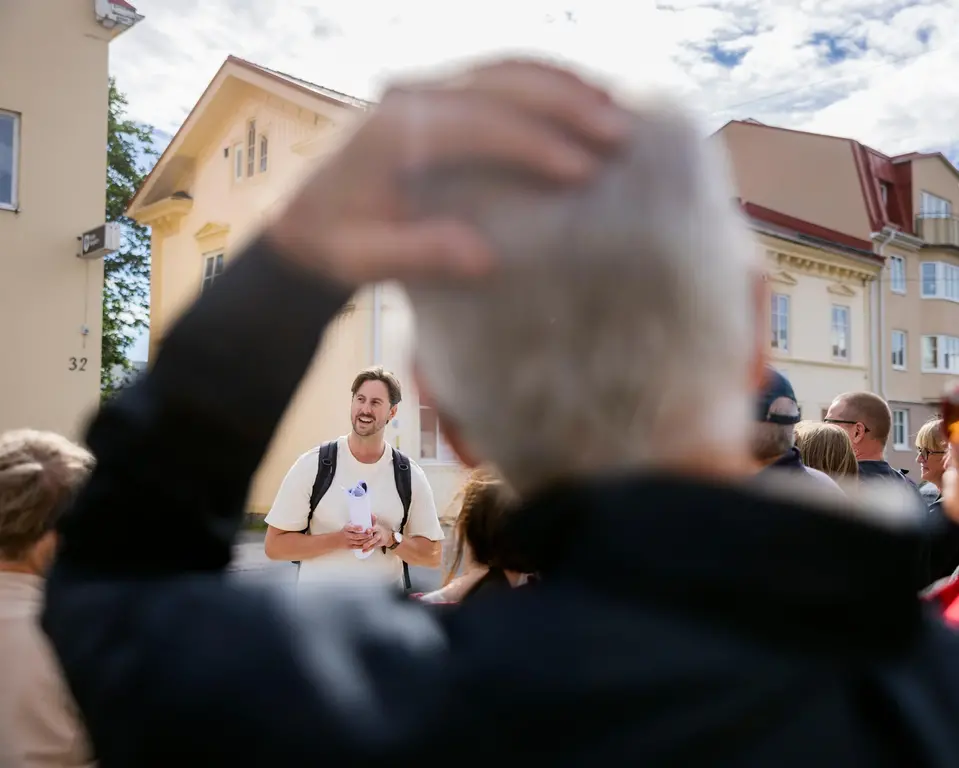
We make our way through the oldest part of the city center and on toward the more contemporary areas. Andreas shows historical photographs that draw the audience in closer. A murmur runs through the group when images of the old fire and police station appear.
%20PD_250817_2-2.webp)
The Legacy of the Old Wooden City
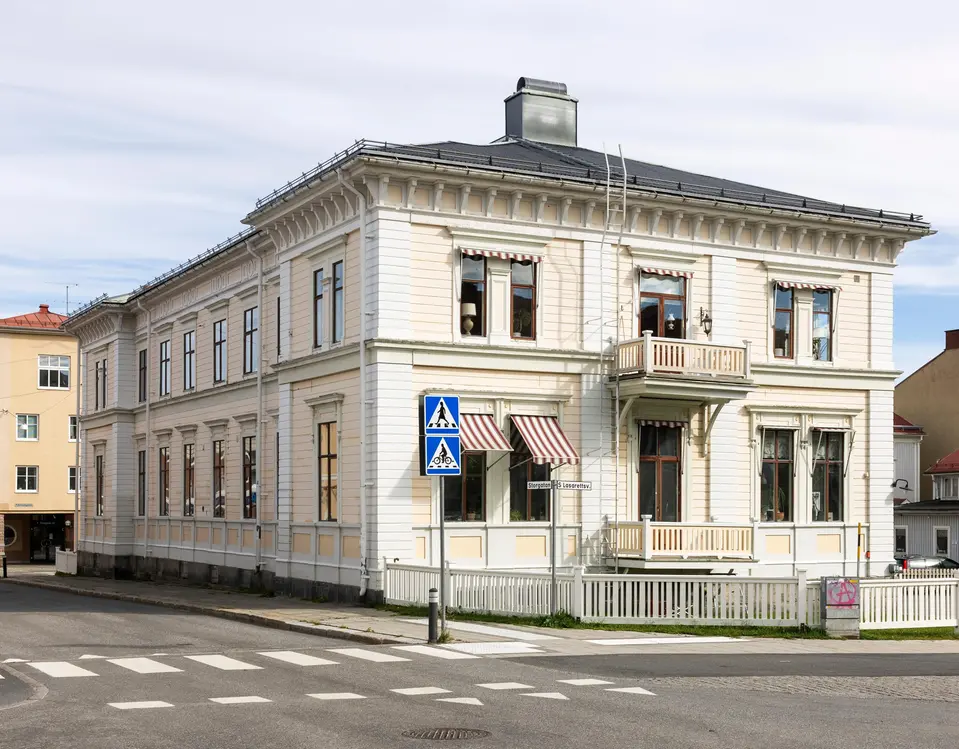
During the 1950s, modernism took firm hold in the country—and with it came a widespread wave of demolitions. Light and space were prioritized over the wooden buildings that had previously defined the city’s character. One of the most controversial demolitions was that of the old city hall, which was torn down in 1955. Throughout the 1960s and 1970s, demolitions continued at a rapid pace, while dedicated residents of Skellefteå fought to preserve what remained of the wooden town.
When we stand in the city park and compare photos of the old city hall with today’s building, the history becomes tangible.
“In my role, I want to highlight the positive. Yes, far too much has been demolished—but we can always develop a more beautiful and vibrant city. The most important thing is that we learn from history,” says Andreas.
One detail many people don’t know is that the new city hall and the city hotel were built around the older, white-painted wooden building before it was demolished. The new building’s light marble facade and the resulting open space—the piazza—can be seen as a tribute to the building’s long service to the city. Even the twelve steps leading up to City Hall remain, albeit reinterpreted in the design language of the 1950s. It is precisely in these layers of continuity and change that the storytelling walk finds its essence. Architecture is not merely aesthetics—it is a mirror of its time.
%20PD_250817_2.webp)
An experience that brings people together
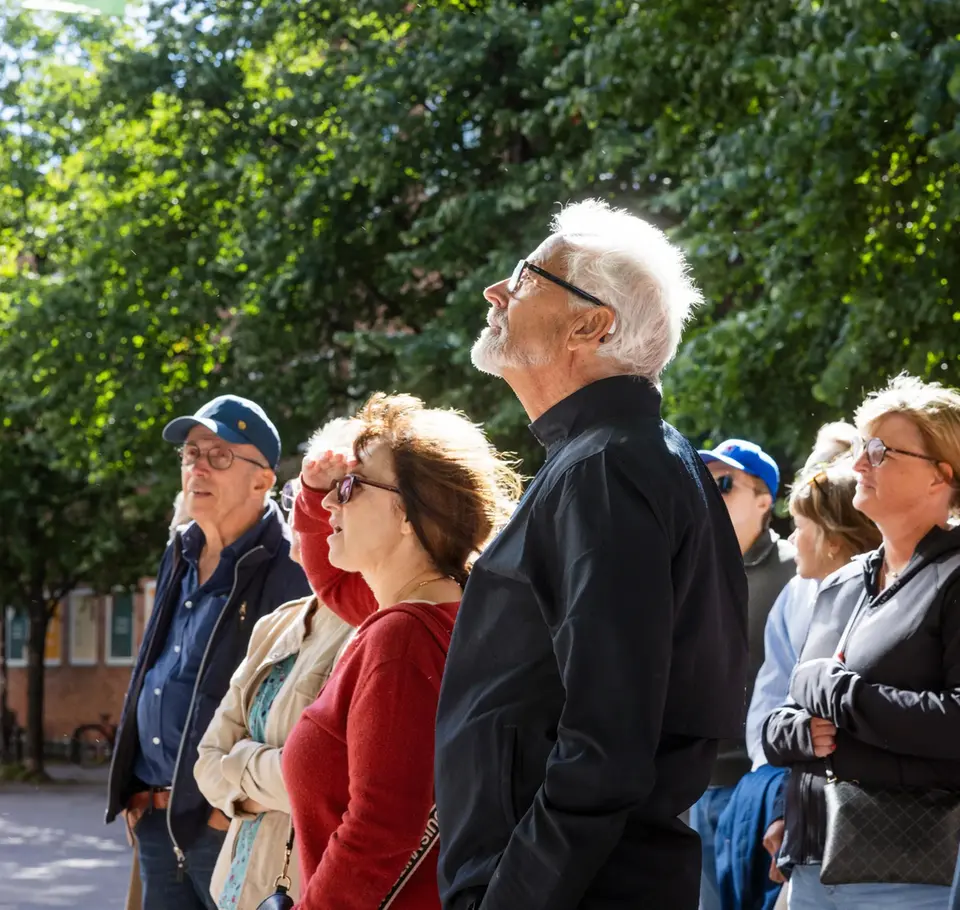
The group includes newcomers, returnees, and curious visitors. Ronny Asplund, a Skellefteå native who has been a teacher for 20 years, is one of the participants.
“This was really interesting. A perfect mix of local history and architecture, presented with humor, enthusiasm, and a wealth of knowledge. You realize there’s always more to discover about your hometown. I highly recommend it.”
Andreas’s architectural history walking tours have now been running for three years—and they’ve been sold out every time. He believes this speaks to the need for context.
- There’s so much history here that few people know about. For me, exploring it together with others strengthens my love for the place. The atmosphere is always so nice—people start talking to each other. Whether you’re just passing through or have lived here your whole life, you’re welcome. Come join us!
%20PD_250817_2-4.webp)
Did you know that…
In 1920, Karl Edvard Lundström founded Skellefteå Spisbrödsfabrik AB on Södra Järnvägsgatan. When he wanted to expand around 1930, the municipality said no. The following year, he bought a factory in Filipstad instead. When the factory in Skellefteå was finally shut down in 1952, the company changed its name to Wasabröd. The chimney from the original bread factory still stands—a silent reminder of a decision that came to shape two cities.
Text: Sofia Hedenström
Photo: Patrick Dergerman
