

Become an active bystander taking action against violence
To successfully prevent violence, the whole of society needs to be involved: the public sector, the business community, associations. And not least you and I as individuals. So: What can we do? How do we reduce the risk of violence occurring? And what strategies can we use if we witness an abusive or threatening situation?
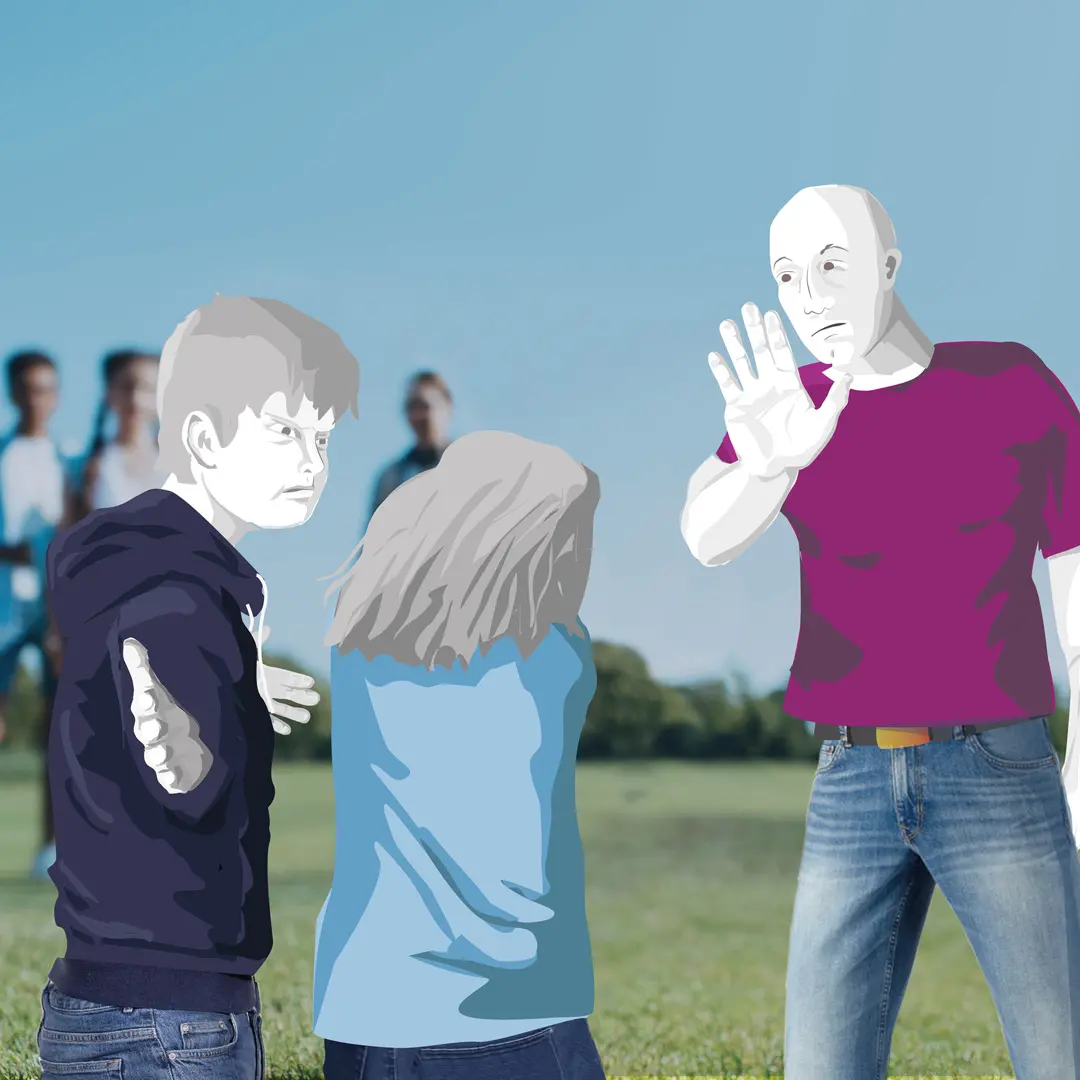
We need to become active bystanders who take action against violence. Being an active bystander means much more than intervening in a physical fight. It also means showing concern for a friend who has a controlling partner. It's also about speaking up and questioning how we talk to and about each other - questioning behaviors and attitudes that lead us to treat each other badly.
If we think in advance about how we might speak up or act in different situations, it is much easier to actually do so. Others are also more likely to help if someone takes responsibility and shows that something is not okay.
As active bystanders, we can intervene before, during and after a violent situation. The more people who see themselves as possible interveners and the more strategies they have to intervene, the more interventions can be made.
Before
If we think about how to speak out against violence beforehand, it is much easier to actually do it. Others are also more likely to help if someone takes responsibility and shows that something is not okay. Examples of interventions we can do to prevent violence:
- Show concern for a friend who has a controlling partner.
- Speak up when someone makes racist or sexist jokes.
- Raise the issue in the group if you experience a tough or harsh atmosphere in a classroom or workplace. "Is this really what we want?"
During
If we witness less severe violence and abuse, there are different ways to speak up and show that it is not okay. Here are some examples:
- Intervene directly. You can intervene and ask what is happening.
- Intervene indirectly. For example, you can get close and ask what's going on, squeeze in between people, or interrupt the situation by asking what time it is.
- Distract. You can enter the situation and pretend that you don't understand that it is violent by starting to talk about something completely different. You can also try shouting or singing to distract the victim.
- Get help from someone else. Sometimes it can be too risky to intervene on your own, so it is good to gather more forces.
It is the interruption itself that is important, not dealing with the conflict itself or explaining why the perpetrator is doing wrong.
After
After an incident of violence, you can check in with the victim, for example by asking "How are you?" or "Do you need help with anything?". Show that you are aware of what has happened and offer your support.
If you know the person who used violence, talk to them and show them that it is not okay. You can also ask why the person chose to victimize them. Encourage them to take responsibility and seek support to stop using violence.
We need to talk about how violence affects us all
What do we do when we notice an abusive or threatening situation? What strategies can we use? There are ways other than direct confrontation - watch the video to find out!